
Double Chin Removal in London, Ontario: Fat or Loose Skin?
Double Chin Removal in London, Ontario: Is It Fat, Loose Skin or Your Jawline? Medically reviewed by Derek Truong, NP, Medical Director at Infinite Medical
Medically reviewed by Derek Truong, NP, Medical Director at Infinite Medical Spa.
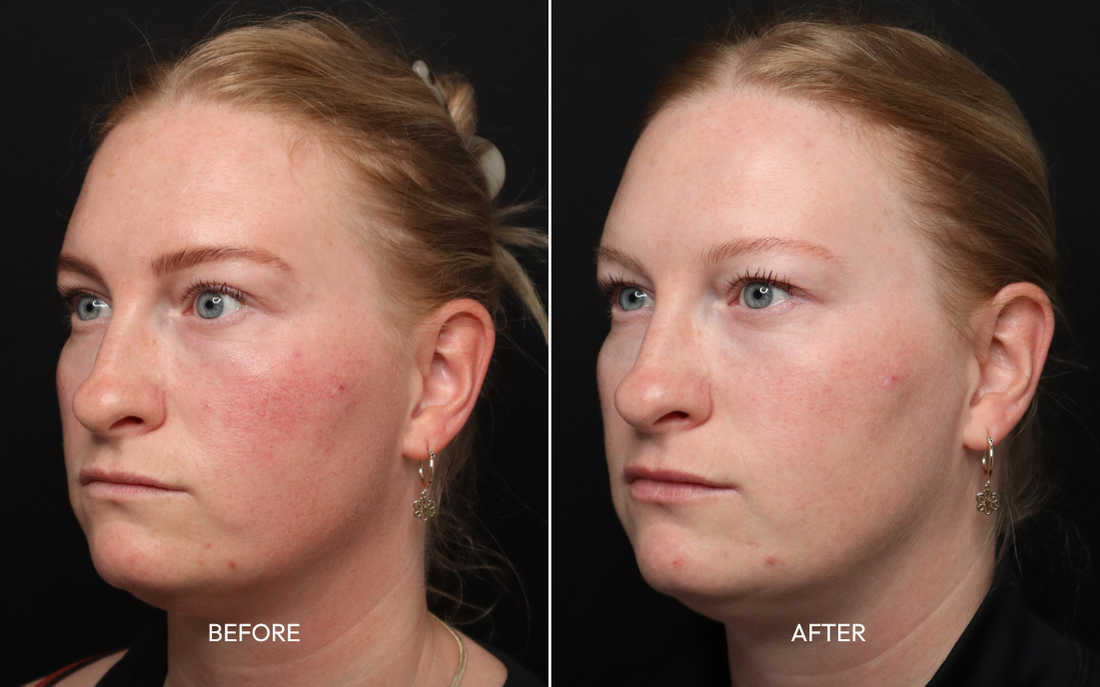
Eighty-five percent of patients in the National Rosacea Society seasonal survey said their rosacea is affected by changes in season. Winter is hard on reactive skin for a stack of reasons that all land at once in southwestern Ontario.
Cold weather itself is a trigger for 46 percent of patients. Wind is a trigger for 57 percent, which matters on a walk across a parking lot in February. Indoor heat affects 41 percent, and forced-air heating runs for months here. Hot baths are a trigger for 51 percent, and hot showers are exactly what most people want after being cold. Heated beverages affect 36 percent.
None of those are unusual on their own. The problem is the swing. Going from minus ten and windy into a heated building, several times a day, asks your facial blood vessels to constrict and dilate repeatedly. Skin that is already prone to flushing does not keep up.
Blood vessels in the face are part of how your body manages temperature. When you are warm, or flushed, or stressed, they widen to bring blood closer to the surface and release heat. That is why the redness appears. When the trigger passes, those vessels are supposed to narrow again and the colour fades.
In redness-prone skin, that second half stops working properly. The vessels stay dilated longer after each episode. Over years of repeated flushing, some of the small surface vessels stay open permanently, which is what dermatologists call telangiectasia and what most people call broken capillaries or spider veins. They are visible because they are no longer constricting at all.
A weakened skin barrier makes it worse. Cold air, wind and dry indoor heat all strip moisture from the outer layer of skin, and a compromised barrier lets irritants in more easily, which drives more inflammation and more flushing. That is the loop that makes winter feel like it never lets up. Redness is one of several concerns that behave this way, and we cover the others in our guide to common skin concerns.
The National Rosacea Society surveyed 1,066 patients on what sets off their symptoms. The results, ranked:
Triggers are personal. What sets off one person does nothing to the next, which is why the American Academy of Dermatology recommends keeping a short diary for a few weeks to find your own pattern rather than cutting out everything on the list at once.
Worth noting that sun exposure sits at the top of that list year-round. Snow reflects UV, and most people stop wearing sunscreen in November. Daily broad-spectrum SPF matters through an Ontario winter as much as it does in July.
Lifestyle management goes a long way. In that same seasonal survey, 87 percent of patients said medical therapy combined with lifestyle changes helped reduce their signs and symptoms. But trigger avoidance does nothing about vessels that are already permanently dilated. Once a capillary is visibly sitting on the surface of your cheek, no amount of sunscreen or gentle cleanser will retract it.
That is the part we treat. We use intense pulsed light, delivered on the Lumenis M22 platform. Our IPL photofacial sends filtered light into the skin where it is absorbed by hemoglobin, the pigment in blood. The energy heats the vessel wall, the vessel collapses, and your body clears it over the following weeks. Surrounding skin is left alone because it does not absorb that wavelength the same way.
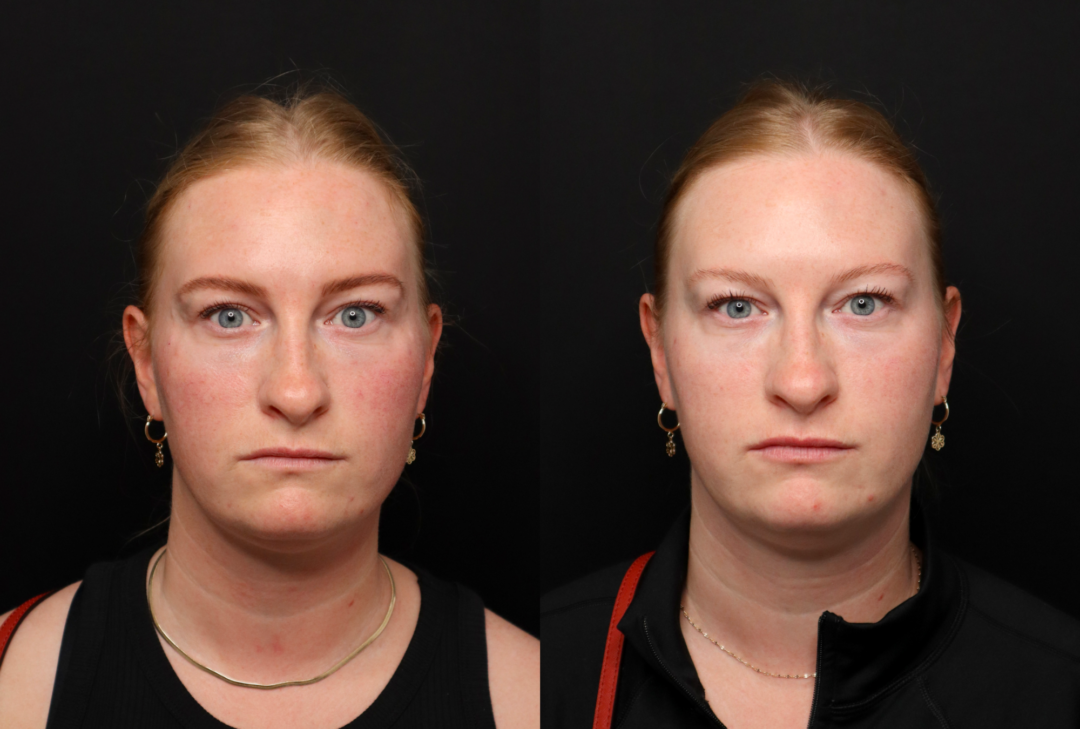
A course is typically three to five sessions spaced three to four weeks apart, at 20 to 30 minutes per session. A 2024 study in the Journal of Clinical Medicine followed 39 patients with vascular concerns, 17 of whom had rosacea, through three IPL sessions one month apart. Researchers rated 53.8 percent of outcomes as excellent and 33.3 percent as good, with no patients recorded as showing no improvement, and side effects limited to brief redness that resolved on its own. That study used its own device and settings, and individual results vary.
Two honest limits. First, IPL works best on lighter Fitzpatrick skin tones, because on deeper skin the light is absorbed by melanin as well as hemoglobin, which raises the risk of pigment change. If that is you, we will talk about other options at consultation rather than proceeding. Second, this is management, not a cure. Treated vessels are gone, but the underlying tendency to flush remains, so most of our clients come back for maintenance.
Our nurse injectors pair the light treatment with a skincare protocol chosen for your barrier, because calmer skin flares less between sessions. Fall and winter are when we schedule most redness work. IPL requires sun avoidance before and after each session, which is difficult to commit to in July and straightforward in January. You can read the full treatment details on our IPL photofacial page, and see more results in the before and after gallery.
Redness is hard to judge by eye, especially your own, and especially over three months. We use VISIA complexion analysis to put a number on it instead.
VISIA uses cross-polarized imaging to strip the surface reflection off the skin, then separates what is left into its colour components. According to Canfield, the manufacturer, the red channel isolates hemoglobin and the brown channel isolates melanin. That separation is what makes it useful here, because it measures vascular redness specifically rather than overall skin tone.
The metrics we watch for redness clients:
Every new client gets a VISIA scan at consultation at no charge. We rescan through a treatment course so progress is measured against your own baseline rather than a memory of how your skin looked in October.
Vessels treated with IPL are cleared by the body and do not come back. The tendency to flush does remain, so new vessels can develop over time, particularly if triggers are not managed. Most clients plan on periodic maintenance sessions rather than a one-time fix.
Usually three to five, spaced three to four weeks apart. The number depends on how widespread the redness is and how your skin responds to the first two sessions. We reassess against your VISIA baseline as we go.
Most people describe it as a quick snap of heat, similar to an elastic band, repeated across the treatment area. Sessions run 20 to 30 minutes and no numbing is typically required. Expect mild redness and warmth for a few hours to a day afterward. Skip hot showers, saunas and heavy workouts for the first 24 hours, keep the skin cool and simple, and wear broad-spectrum SPF 30 or higher every day between sessions.
Yes. Sun exposure is the single most reported rosacea trigger at 81 percent, snow reflects ultraviolet light, and sun protection is required between IPL sessions regardless of the season. Broad-spectrum SPF 30 or higher, daily.
No. Diagnosing rosacea, and prescribing any medication for it, is your physician’s or dermatologist’s role. We assess and treat the visible redness and surface vessels, and we work alongside whatever your doctor has you on.
A three to five session course spread three to four weeks apart runs roughly three to five months. Starting in the fall means finishing before the high-sun months, which is the ideal sequence. You can book an IPL photofacial at our London, Ontario clinic online, and we will assess your skin and map out the season at your first visit.
This article was medically reviewed by Derek Truong, NP, Medical Director at Infinite Medical Spa. It is general information, not medical advice. A rosacea diagnosis and any prescription treatment should come from your physician.

Double Chin Removal in London, Ontario: Is It Fat, Loose Skin or Your Jawline? Medically reviewed by Derek Truong, NP, Medical Director at Infinite Medical

Age Spot Removal in London, Ontario: What Works After Summer Medically reviewed by Derek Truong, NP, Medical Director at Infinite Medical Spa. Age spot removal
Do PDRN Serums Actually Work? A Clinical Review of Topical vs In-Clinic PDRN in London, Ontario Medically reviewed by Derek Truong, NP, Medical Director at
