

Which Facial Is Best for Your Skin? A Guide to Medical Facials in London, Ontario
Which Facial Is Best for Your Skin? A Guide to Medical Facials in London, Ontario Medically reviewed by Derek Truong, NP, Medical Director at Infinite
Medically reviewed by Derek Truong, NP, Medical Director at Infinite Medical Spa.
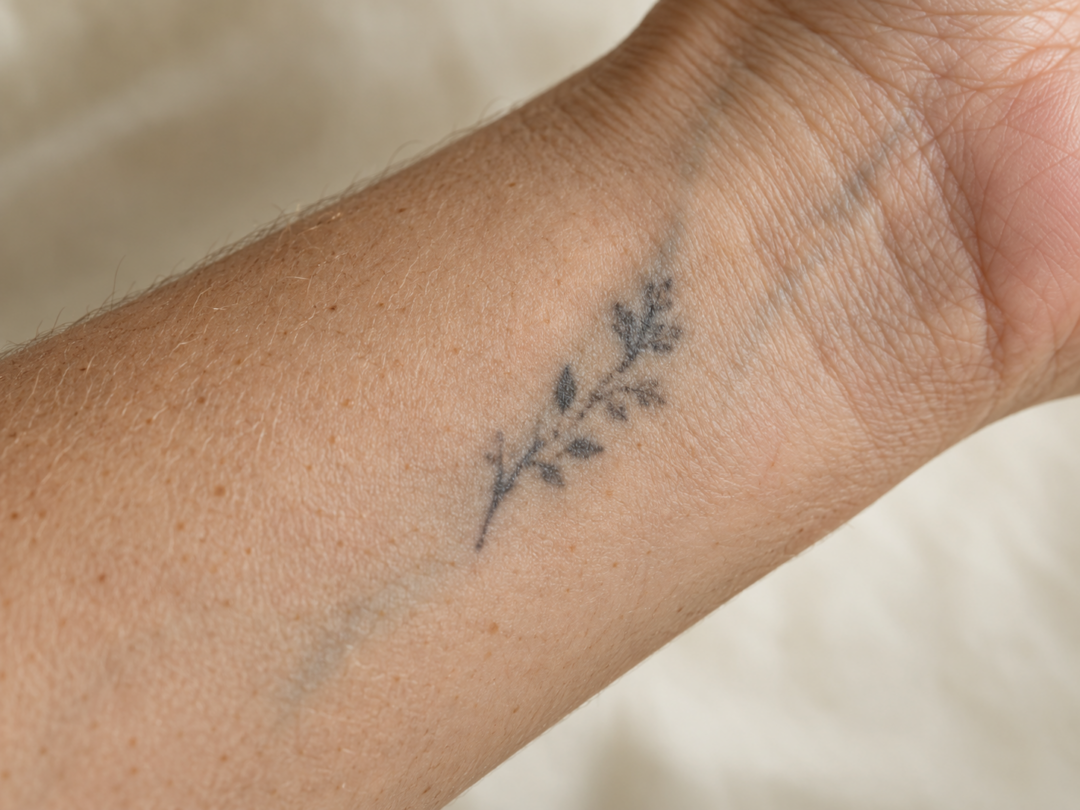
Laser tattoo removal in Canada usually costs between $100 and $500 per session, depending mostly on the size of the tattoo. Most tattoos need several sessions, so the total for a small tattoo often lands somewhere between $800 and $2,000, and larger or more colourful pieces can cost several thousand dollars.
That range is wide because the number of sessions changes from one tattoo to the next. This guide breaks down what drives the cost for people in London, Ontario, how many sessions to plan for, and what to ask before you book. If you are still comparing options, this overview of the laser treatments offered at Infinite shows how tattoo removal fits alongside other laser services.
Most clinics in Ontario price each session by the size of the tattoo. A 2026 Canadian price guide from iFinance, which uses the Greater Toronto Area as its reference, puts typical per-session prices at:
Prices in London, Ontario generally sit within the same range. Some clinics charge a flat fee per session, and many offer packages that bring the per-session price down when you commit to a series.
Your total is the per-session price multiplied by the number of sessions you need. The same Canadian guide estimates that most tattoos need about 6 to 12 sessions, so a small tattoo often costs $800 to $2,000 in total, while larger pieces can run several thousand dollars.
A simple example: a palm-sized black tattoo at $200 a session that clears in 8 sessions comes to about $1,600 over the full course of treatment. The same tattoo with bright colours could need more sessions and cost more, even at the same price per visit.
This is why a quote based only on the price of one session can be misleading. Ask any clinic for an estimate of the total number of sessions, not just the per-visit price.
There is no single number. UCSF Health notes that some patients finish in five to 10 sessions, while others need more, up to 20 in some cases. Sessions are spaced weeks apart so the skin can heal and your body can clear the broken-down ink. The American Society for Laser Medicine and Surgery recommends six to eight weeks between sessions, and notes that no tattoo can be fully removed in a single session.
That spacing is also why removal takes time. Eight sessions spread six to eight weeks apart is roughly a year of treatment from start to finish.
Many providers use the Kirby-Desai scale, a scoring system published by dermatologists in 2009. It scores six factors to estimate how many sessions a tattoo will need: skin type, where the tattoo is on the body, ink colour, the amount of ink, any scarring or skin changes, and whether the tattoo has been layered or covered up. Newer lasers have cleared tattoos in fewer sessions than the scale predicts in some studies, so treat any estimate as a starting point, not a promise.
At Infinite Medical Spa in London, Ontario, tattoo removal is done with the Toro laser, and your plan maps out the likely number of sessions, the fading to expect and your total cost before you start. You can see how Toro laser tattoo removal works at Infinite and what each session involves.
Infinite Medical Spa, London, Ontario
Every new patient at Infinite starts with a consultation and a treatment plan mapped by our team under Derek Truong, NP, Medical Director. You leave knowing how many sessions your tattoo is likely to need and what your total cost will be, with no obligation to book treatment.
551 Oxford St W, Unit 201 · (519) 709-6494 · Mon to Sat, 8 to 4
Because the total depends on the number of sessions, anything that slows the fading raises the cost. UCSF Health lists tattoo size, colour, location, age and the amount of ink in the skin as the main factors.
Larger tattoos take longer to treat and are priced higher per session.
Black ink usually responds best. UCSF Health notes that bright, multicoloured tattoos are the hardest to remove and frequently need the most sessions.
Professional tattoos tend to hold more ink, packed deeper and more densely, which can mean more sessions. Older and amateur tattoos often have less ink and may fade faster.
Areas with good circulation, such as the neck or upper arm, often clear faster than hands, ankles and feet, which sit farther from the heart.
A tattoo that has been covered with another tattoo has more layers of ink to break down, which adds sessions.
Your immune system does the work of clearing ink between sessions. The American Academy of Dermatology notes that you need a healthy immune system for removal to work, and that people who are pregnant or breastfeeding should not be treated.
No. The American Academy of Dermatology advises against treating tattoo removal as a do-it-yourself project, and warns that your health and the appearance of your skin are at stake. Creams that promise to fade ink can irritate or scar the skin without reaching the ink in the deeper layer where tattoos sit.
If cost is the concern, a package of laser sessions from a trained provider is usually the better value, because it is built around a realistic number of treatments.
You can also read about the nurses and medical team who provide treatments at Infinite.
Most clinics in Ontario charge roughly $100 to $500 per session, based mainly on tattoo size. Your total depends on how many sessions your tattoo needs, which is best estimated at an in-person consultation.
No. The American Society for Laser Medicine and Surgery notes that no tattoo can be fully removed in a single session, and that more than one treatment is usually needed.
Most people compare each pulse to a rubber band snapping against the skin. Sessions are short, and numbing options can make treatment more comfortable.
Yes. Many people only need a few sessions to lighten a tattoo enough for a new design to cover it, which costs less than full removal.
Laser treatment carries a lower risk of scarring than older methods such as surgical removal or dermabrasion, but some risk remains. Following aftercare instructions and spacing sessions properly help lower it.
This article was medically reviewed by Derek Truong, NP, Medical Director at Infinite Medical Spa in London, Ontario. It is for general education only and is not a substitute for an in-person assessment.

Derek Truong, NP — Medical Director, Infinite Medical Spa
Derek Truong is a Nurse Practitioner and the Medical Director at Infinite Medical Spa in London, Ontario. He sets our clinical standards and medically reviews our educational content for accuracy and safety. Learn more about our team.
Which Facial Is Best for Your Skin? A Guide to Medical Facials in London, Ontario Medically reviewed by Derek Truong, NP, Medical Director at Infinite
How Much Does Laser Tattoo Removal Cost in London, Ontario? A 2026 Guide Medically reviewed by Derek Truong, NP, Medical Director at Infinite Medical Spa.

What to Do After Botox: Your Aftercare Timeline for Lying Down, Workouts, Makeup and More in London, Ontario Medically reviewed by Derek Truong, NP, Medical
