

Which Facial Is Best for Your Skin? A Guide to Medical Facials in London, Ontario
Which Facial Is Best for Your Skin? A Guide to Medical Facials in London, Ontario Medically reviewed by Derek Truong, NP, Medical Director at Infinite
Medically reviewed by Derek Truong, NP, Medical Director at Infinite Medical Spa.
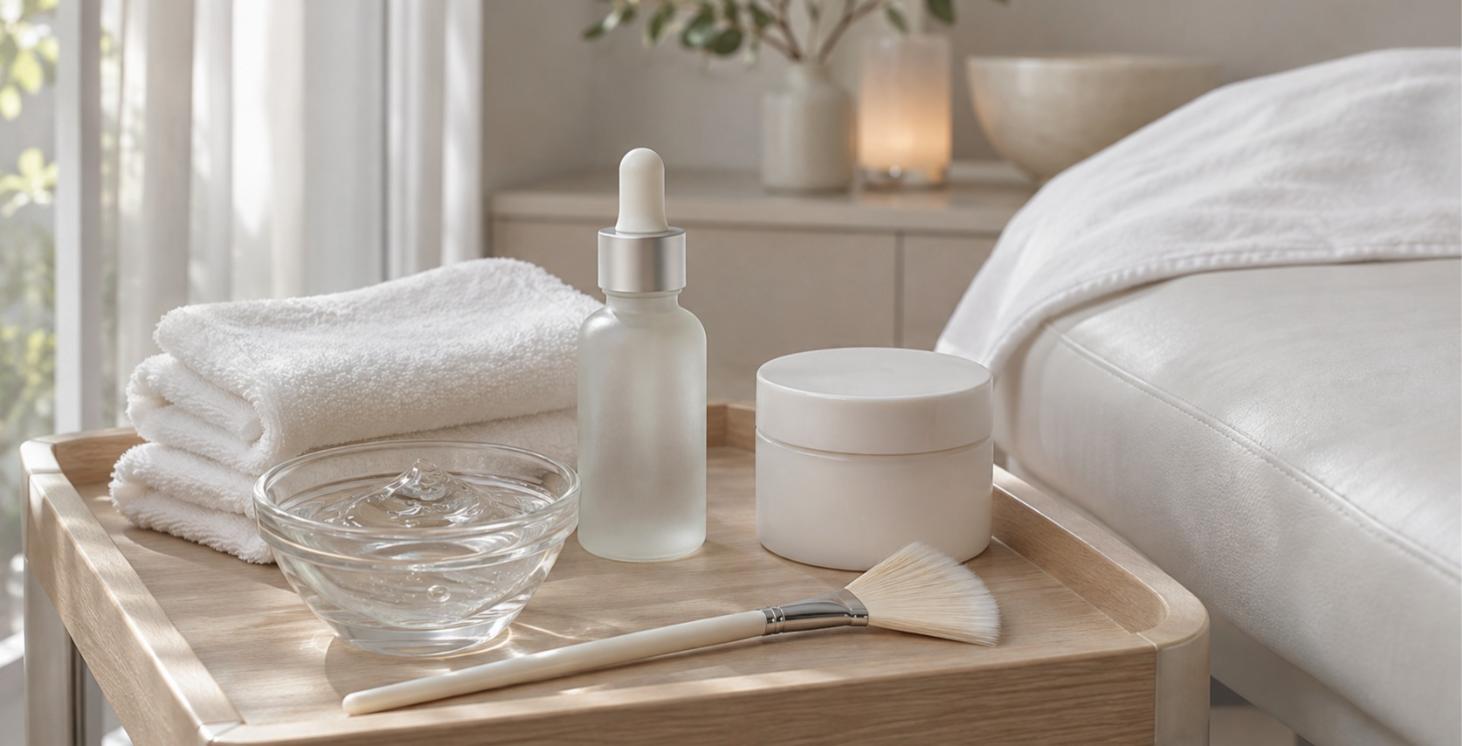
The best facial for your skin depends on what you want to change. A HydraFacial suits congested or dull skin that needs a deep clean with no downtime, a medical-grade chemical peel suits pigment, sun damage and breakouts, microneedling suits texture, acne scars and fine lines, a carbon laser facial suits oily skin and enlarged pores, and an IPL photofacial suits redness and brown spots.
All five are medical facials, which means they reach deeper than a relaxing spa facial and are chosen for a specific skin concern. This guide compares them side by side for people in London, Ontario, so you can see what each one does, how much downtime to expect and which concern it is built for.
A spa facial is mostly about cleansing, massage and hydration, and it works on the very top layer of the skin. A medical facial uses a device, an acid or a laser to reach a specific concern, such as pigment, scarring or enlarged pores. Medical facials are usually done in a clinic setting, often as a planned series.
That does not make one better than the other for everyone. If your goal is relaxation and a quick glow, a spa facial is fine. If you want a measurable change in a particular concern, a medical facial is built for that.
A HydraFacial cleanses, exfoliates and extracts using suction, then pushes hydrating serums into the skin. There is no downtime, so you can go straight back to your day.
The research is small but encouraging. In a 2022 study published in the Journal of Clinical and Aesthetic Dermatology, the share of patients with clear or almost clear skin rose from 20 percent to 65 percent after a series of six HydraFacial Clarifying treatments, as rated by investigators. An earlier study of hydradermabrasion found increases in skin thickness after six treatments spaced 7 to 10 days apart.
Best for: blackheads, congestion, dullness and dehydrated skin, or a polished look before an event. You can see what a HydraFacial at Infinite includes, step by step.
A chemical peel uses an acid solution to remove damaged outer layers of skin so fresher skin can come through. Peels range from light to deep. Cleveland Clinic notes that after a light peel you can expect redness and scaling for three to seven days, and light peels can be repeated every two to five weeks. After a medium peel, makeup can usually go back on after five to seven days.
Best for: uneven tone, sun damage, acne and early fine lines. Infinite’s medical-grade peel is a medium-depth peel that includes a take-home kit, and you can read how the medical-grade chemical peel at Infinite works and who it suits.
Microneedling creates tiny, controlled channels in the skin, which prompts it to build new collagen. A clinical review in StatPearls describes it as well tolerated with minimal downtime, and notes that skin treated with four sessions a month apart showed a large increase in collagen and elastin at six months.
Boosters such as PRP or growth-factor serums can be added during the treatment, which is what people mean by a vampire facial. Expect redness for a day or two.
Best for: rough texture, acne scars, enlarged pores and fine lines. You can compare the microneedling booster options at Infinite, including VAMP and NCTF.
A carbon laser facial, sometimes called a Hollywood peel, starts with a thin layer of carbon on the skin. A laser then heats and lifts the carbon away, taking oil and debris with it. In a randomized split-face study of 22 patients, three sessions of this technique two weeks apart reduced inflammatory acne lesions by 58.6 percent on the treated side.
There is little to no downtime, which is why it is popular before events.
Best for: oily skin, enlarged pores, breakouts and an instant brightness boost. You can learn how the carbon laser facial at Infinite is done.
An IPL photofacial uses broad-spectrum light to target brown pigment and visible redness in the same session. Brown spots darken and flake off over the following week or two, and redness fades as treated vessels clear.
Best for: sun spots, freckles, uneven tone, facial redness and broken capillaries. You can see what to expect from an M22 IPL photofacial at Infinite, session by session.
Start with the one concern that bothers you most, then match it to a treatment:
Many people have more than one concern, and some treatments are combined in a plan. If you are weighing two or three options, you can compare every skin treatment at Infinite in one place before you book. Timing matters too. Treatments that make skin more sensitive to the sun are often easier to schedule in the fall and winter months, and daily sunscreen protects results year-round.
Infinite Medical Spa, London, Ontario
Every new patient at Infinite starts with a complimentary VISIA skin analysis and a treatment plan mapped by our team under Derek Truong, NP, Medical Director. You leave knowing which facial fits your skin, how many sessions to plan for and what your total will be, with no obligation to book treatment.
551 Oxford St W, Unit 201 · (519) 709-6494 · Mon to Sat, 8 to 4
A HydraFacial, a carbon laser facial or a chemical peel are common choices for active breakouts and congestion. For acne scarring, microneedling is usually the better fit. Active, severe acne should be assessed first, since it may need medical treatment.
HydraFacials and carbon laser facials have little to no downtime. Chemical peels and microneedling usually involve a few days of redness, flaking or peeling.
It depends on the treatment. Light chemical peels can be repeated every two to five weeks, according to Cleveland Clinic, while microneedling and IPL are usually done as a series spaced several weeks apart.
Many are, but the choice of treatment and settings matters more for darker skin. Microneedling and appropriately chosen peels are often good options. Your provider should assess your skin type before recommending any laser or light treatment.
Some facials can flare rosacea, while IPL is often used to calm visible redness. Tell your provider about rosacea before any treatment so the plan can be adjusted.
This article was medically reviewed by Derek Truong, NP, Medical Director at Infinite Medical Spa in London, Ontario. It is for general education only and is not a substitute for an in-person assessment.

Derek Truong, NP — Medical Director, Infinite Medical Spa
Derek Truong is a Nurse Practitioner and the Medical Director at Infinite Medical Spa in London, Ontario. He sets our clinical standards and medically reviews our educational content for accuracy and safety. Learn more about our team.
Which Facial Is Best for Your Skin? A Guide to Medical Facials in London, Ontario Medically reviewed by Derek Truong, NP, Medical Director at Infinite
How Much Does Laser Tattoo Removal Cost in London, Ontario? A 2026 Guide Medically reviewed by Derek Truong, NP, Medical Director at Infinite Medical Spa.

What to Do After Botox: Your Aftercare Timeline for Lying Down, Workouts, Makeup and More in London, Ontario Medically reviewed by Derek Truong, NP, Medical
