
Dysport: The Complete Guide to Units, Results, Safety and Cost
Dysport: The Complete Guide to Units, Results, Safety and Cost Medically reviewed by Derek Truong, NP, Medical Director at Infinite Medical Spa. Dysport is a
Medically reviewed by Derek Truong, NP, Medical Director at Infinite Medical Spa.
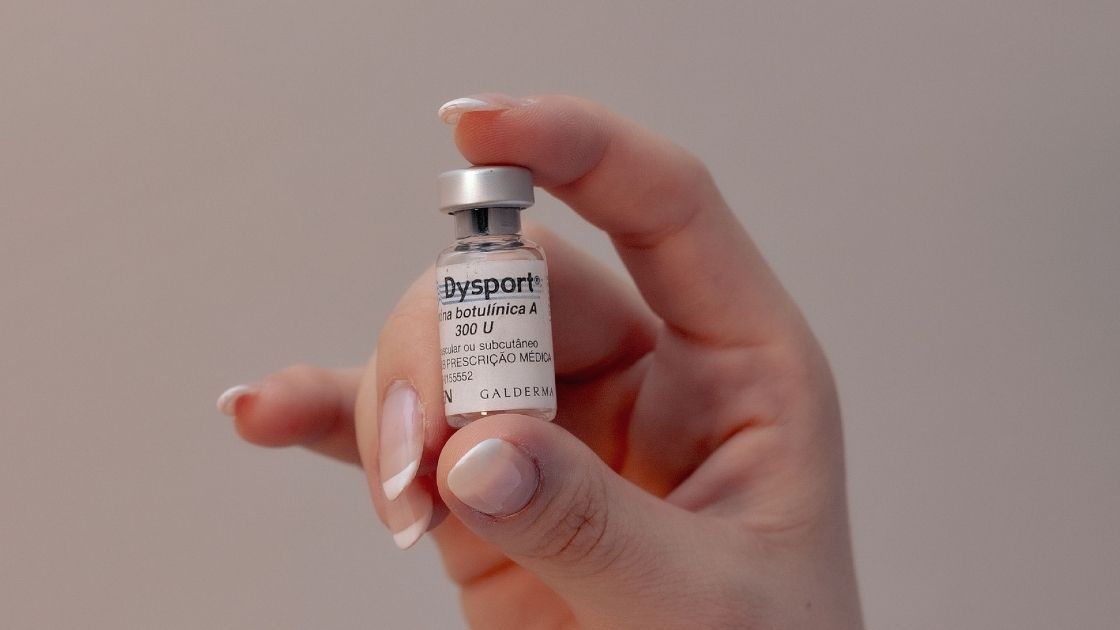
Dysport is a prescription injectable that softens expression lines, like the “11s” between the brows and the crow’s feet around the eyes, by temporarily relaxing the muscles that create them. It belongs to the same family as Botox. Results usually start to show in two to three days and typically last three to four months.
Botulinum toxin injections, the category Dysport belongs to, were the most common non-surgical cosmetic procedure worldwide in 2024. Plastic surgeons performed 7.8 million of them that year, according to the International Society of Aesthetic Plastic Surgery (ISAPS). If you’re considering Dysport in London, Ontario, start here. This guide answers the questions people ask most before booking, from units and timing to side effects and cost.
Dysport is the brand name for abobotulinumtoxinA, a purified form of botulinum toxin type A that’s made by Ipsen and distributed in Canada by Galderma. It’s a prescription drug. That means a qualified health professional has to prescribe it and give it to you.
The cosmetic version sold in Canada is called Dysport Aesthetic. Health Canada has approved it for the temporary improvement in the appearance of moderate to severe frown lines (glabellar lines) and crow’s feet (lateral canthal lines) in adults under 65. The crow’s feet approval was added in 2018. In the U.S., Dysport’s cosmetic approval covers frown lines only, so Canadian patients have a slightly broader approved use.
Every time you frown or squint, small muscles under the skin contract and crease the skin above them. Repeat that for years and the creases start to stick around. Dysport blocks the nerve signal that tells a specific muscle to contract, so the muscle relaxes and the skin over it smooths out.
It works best on dynamic wrinkles, the lines that appear when a muscle moves, like when you frown or smile (Cleveland Clinic). Lines that stay visible when your face is completely still often need more than a muscle relaxer alone, so your injector will look at your face both at rest and in motion. The effect is temporary. Movement comes back gradually as the product wears off.
Health Canada has approved two cosmetic areas for Dysport:
Injectors also use Dysport in other upper-face areas, such as the horizontal lines across the forehead. Using it outside the approved list is called off-label use. Whether that’s right for you comes down to your injector’s clinical judgment and your consultation. The full list of areas treated at Infinite Medical Spa is on the cosmetic Dysport treatment page.
Both products contain the same type of active ingredient, botulinum toxin type A, and they relax muscles the same way. Where they differ, according to Cleveland Clinic, comes down to four practical things:
Is one better? Not across the board. The right pick depends mostly on your anatomy and on how you’ve responded to treatment before. For a side-by-side look at the best-known brands, read how Dysport, Botox, Xeomin and Jeuveau compare.
Health Canada’s product monograph for Dysport sets out a standard dose for each approved area:
Those numbers can look high if you’re used to hearing Botox doses. That’s expected. The monograph states that Dysport units are specific to the product and can’t be swapped one-for-one with other botulinum toxin brands. Your injector adjusts from the standard dose based on how strong your muscles are and how much movement you want to keep.
Dysport usually starts working within two to three days. In the clinical trials summarized in its Health Canada monograph (revised 2023), some people saw a change in as little as 24 hours, and the median time to a noticeable response was three days. A 2020 systematic review of 42 studies found the same pattern, with onset most often reported at two to three days (Nestor et al., 2020).
The result keeps settling after that, and follow-ups are usually booked about two weeks out, once the full effect has had time to show. Got a wedding coming up? Book at least two weeks before it.
Most people get three to four months from a Dysport treatment. The Health Canada monograph says the effect may last up to four months, and the 2020 systematic review found four months was the most commonly reported duration. Four studies in that review saw results hold at five months, and three at six months or later (Nestor et al., 2020).
Results fade gradually. Movement creeps back slowly, and most people rebook once they notice their lines returning. The monograph advises against repeating treatment more often than every three months. How long yours lasts depends on factors like your dose and the strength of the treated muscles.
A first visit starts with a consultation. Your injector goes over your health history, then watches your face move to see which muscles are doing the most work. The treatment itself is quick. For neuromodulators like Dysport, the whole procedure takes about 10 minutes, and the very fine needle feels like a small prick with a little stinging (Cleveland Clinic).
There’s no downtime. Most people head straight back to work, maybe with a little redness or a few small bumps where the needle went in, which usually settle quickly. Aftercare follows the same steps used for Botox, laid out in the complete guide to Botox.
Side effects from Dysport are usually mild and short-lived. In the frown line trials listed in its Health Canada monograph (2023), which included more than 2,000 people treated with Dysport, the most common were:
In the crow’s feet trials, the most common were headache (4.3%), injection site reactions (2.4%) and eyelid swelling (1.6%). An eyelid droop wears off as the product does. Still, it’s one reason precise placement matters.
Every botulinum toxin product, Dysport included, carries a warning that its effect can spread beyond the injection area. Get medical help right away if you notice trouble swallowing, speaking or breathing, blurred or double vision, or unusual muscle weakness after treatment (Cleveland Clinic).
A few health situations rule Dysport out, and others call for extra caution. Here’s what its Health Canada monograph lists:
The approved cosmetic uses are for adults under 65. Share your full health history at your consultation, including any medications you take.
Dysport is priced per unit, and this is where a lot of people get tripped up. It takes more Dysport units than Botox units to treat the same area. So Dysport usually costs less per unit, while the total for a treatment tends to land in a similar range (Cleveland Clinic).
Skip the per-unit comparison. The number that matters is the total for the area you want treated, and any clinic should be able to give you that at your consultation. What moves the total? Mostly the number of areas and the dose your muscles need. For local price ranges, see this breakdown of what Botox and similar treatments cost in London, Ontario.
Because Dysport is a prescription drug, your care should involve a prescriber, such as a physician or nurse practitioner, and an injector with advanced training in facial anatomy. Small differences in where the product goes can change how your brows sit and how natural the result looks.
Questions worth asking at your consultation:
This guide on how to choose an injector in London, Ontario covers credentials and red flags in more detail. At Infinite Medical Spa, Dysport is performed by advanced-trained nurse injectors, with Medical Director Derek Truong, NP, on site. Ready to talk it through? Book a Dysport consultation and bring your questions.
Health Canada has approved Dysport for cosmetic use, and its product monograph (2023) summarizes clinical trials that included more than 2,000 people treated for frown lines. Most side effects are mild and temporary. The biggest safety factor within your control is choosing a qualified, medically supervised injector.
Not much. It feels like a quick pinch with a little stinging, and the whole treatment takes about 10 minutes (Cleveland Clinic). If you’re nervous about needles, ask your injector about ice or numbing cream.
No more often than every three months, according to Dysport’s Health Canada monograph. Most people rebook every three to four months. That’s usually when movement starts coming back.
Yes. People switch for different reasons, like how quickly a product kicks in or how long it lasts for them. Your injector will recalculate the dose, since research supports a conversion of about three Dysport units or fewer for every Botox unit (Scaglione, 2016).
It can. Dysport is often described as having a wider spread than Botox, meaning it may reach a little farther from the injection point (Cleveland Clinic). How far any botulinum toxin travels also depends on the volume and dilution used, which is why technique matters (Ramirez-Castaneda et al., 2013). Injectors account for this when they plan where each injection goes.
Not if you have a cow’s milk protein allergy. Dysport’s Health Canada monograph lists it as a contraindication. Lactose intolerance is a different thing, so tell your injector about any dairy reaction and they’ll confirm whether Dysport is an option.
This article was medically reviewed by Derek Truong, NP, Medical Director at Infinite Medical Spa in London, Ontario. It is for general education only and does not replace a personal consultation with a qualified health professional. Individual results vary.

Derek Truong, NP — Medical Director, Infinite Medical Spa
Derek Truong is a Nurse Practitioner and the Medical Director at Infinite Medical Spa in London, Ontario. He sets our clinical standards and medically reviews our educational content for accuracy and safety. Learn more about our team.
Dysport: The Complete Guide to Units, Results, Safety and Cost Medically reviewed by Derek Truong, NP, Medical Director at Infinite Medical Spa. Dysport is a
Cold weather, wind and indoor heat drive winter rosacea flare-ups. Learn why facial redness worsens and how we treat it in London, Ontario.
Can Ultherapy lift jowls and tighten a sagging neck? What the research shows, who it suits, and where the limits are. London, Ontario.
