What is the difference between RF microneedling and regular microneedling?
One uses needles. The other uses needles plus heat. Regular microneedling works mainly in the upper layers of the skin, where the micro-injuries prompt the body to produce fresh collagen and elastin. RF microneedling uses insulated needles that release radiofrequency energy once they sit in the deeper tissue, warming it evenly and setting off a stronger collagen response, according to the Cleveland Clinic.
A useful way to picture it: regular microneedling refreshes the surface, while RF microneedling also remodels the support structure underneath. A 2025 review in Frontiers in Medicine describes RF microneedling as traditional needling combined with thermal energy in the dermis, which drives deeper collagen remodelling.
How does each treatment work?
How regular microneedling works
A provider cleans the skin and applies numbing cream about 30 to 45 minutes before treatment. A handheld device with thin needles then makes tiny punctures in the top layer of skin. The body reads those punctures as damage to repair, so it produces more collagen and elastin, per the Cleveland Clinic. Sessions are usually spaced three to eight weeks apart. At Infinite Medical Spa, microneedling with boosters pairs the needling with serums applied while those micro-channels are open.
How RF microneedling works
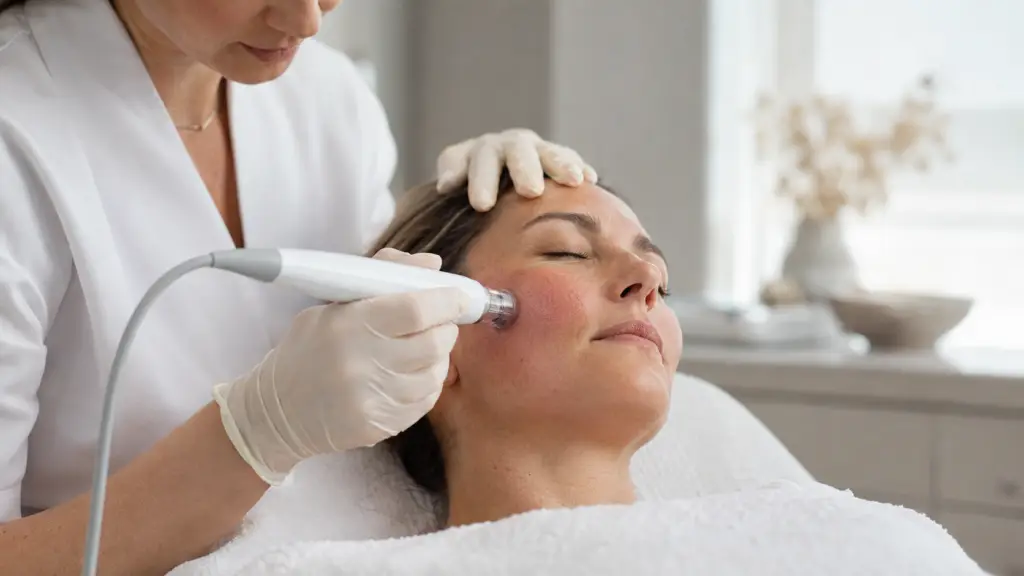
The needling step looks the same from the outside. The difference sits inside the needles, which are insulated and deliver radiofrequency energy under the skin. That energy warms the deep tissue evenly, which stimulates new collagen fibres to grow, according to the Cleveland Clinic. Infinite Medical Spa performs this treatment with the Potenza device by Cynosure, and a session takes about 30 to 45 minutes plus numbing time.
Which treatment is better for your skin concern?
Neither one is the better treatment across the board. Each has a lane.
Texture, pores, and early fine lines
These concerns sit near the surface, which is exactly where regular microneedling works. It is often the sensible starting point for someone in their late 20s or 30s who wants smoother skin and smaller-looking pores before deeper changes appear.
Acne scars
Both treatments are used here. The Cleveland Clinic notes most people need four to six microneedling sessions for acne scars. For deeper or pitted scars, RF microneedling can reach further down. A 2025 systematic review covering 16 studies and 481 patients found that radiofrequency microneedling on its own is likely an effective treatment for acne scarring, with side effects that were minimal and short-lived.
Loose or crepey skin
This is where RF microneedling stands apart. Skin laxity involves the deeper support structure, and the warming effect targets that layer directly. The Cleveland Clinic lists wrinkling, scars, and skin laxity among the concerns RF microneedling can improve. One honest caveat: neither treatment replaces surgery, and significant sagging needs a different conversation.
How many sessions and how much downtime?
With regular microneedling, plan on a series. Four to six sessions is common for scarring, spaced three to eight weeks apart, and collagen keeps building for three to six months after you start, per the Cleveland Clinic.
RF microneedling usually needs fewer visits. The Cleveland Clinic recommends two to four treatments, and Potenza plans at Infinite Medical Spa typically run three to four sessions spaced four to six weeks apart. Downtime is short for both. Skin tends to be mildly red for about 24 hours after RF microneedling, and most people are back to their normal routine within a day or two. For a day-by-day picture, see what Potenza RF microneedling recovery looks like.
Is RF microneedling worth the extra cost?
Cost is the sticking point for most people. RF microneedling runs more per session because of the technology involved. But the math isn’t as lopsided as it first appears, since RF plans often involve fewer sessions than a full microneedling series for scarring.
The better question is whether your concern needs heat. If the issue is surface texture or early fine lines, regular microneedling may be all you need, and paying more wouldn’t buy you more. If the issue is laxity or deep scarring, RF microneedling targets tissue the traditional version can’t reach as effectively. Paying once for the right treatment beats paying twice after starting with the wrong one.
How do you choose between the two?
Start with candidacy. RF microneedling is not recommended for people with cardiac pacemakers, metal implants, a history of keloid scarring, or during pregnancy, so the clinic screens for these before booking. Regular microneedling has fewer restrictions but still calls for healthy, infection-free skin on treatment day.
From there it comes down to your main concern, plus your timeline and budget. A skin assessment settles most of it quickly. The team can map your skin, explain whether Potenza RF microneedling treatments or the traditional version fits better, and build a session plan around a realistic goal. You can book a consultation with the medical team to get a recommendation specific to your skin.
Frequently asked questions
Is RF microneedling more painful than regular microneedling?
Not usually. Both treatments use numbing cream beforehand, and most people describe prickling or light pressure rather than pain during Potenza sessions. Sensitivity varies by person and by area treated. There is a fuller breakdown in is microneedling painful.
Can RF microneedling be used on darker skin tones?
Research supports it. The 2025 systematic review on acne scarring found radiofrequency microneedling can be a safe option for darker skin tones, with minimal reported side effects. A consultation is still the right first step, since device settings are adjusted to each person’s skin.
How long do the results last?
Collagen built by either treatment continues developing for three to six months, and the Cleveland Clinic notes some people book a maintenance session about once a year afterward. Sun protection and consistent skincare help the results hold.
How much does RF microneedling cost in London, Ontario?
Pricing depends on the area treated and the number of sessions in your plan, so it is quoted after an assessment. Current treatment details are listed on the Potenza RF microneedling service page, and financing options are available.
What should you avoid after either treatment?
Skip liquid makeup for 24 hours, avoid picking at the skin, stay out of strong sun, and hold off on saunas, hot tubs, and intense workouts for the first day. Daily sunscreen matters most, since the new skin is sensitive to UV while it heals.
Sources
- Cleveland Clinic: Microneedling
- Cleveland Clinic: Radio Frequency (RF) Microneedling
- American Society of Plastic Surgeons: 2024 Procedural Statistics Report
- Fractional Radiofrequency Microneedling as a Monotherapy in Acne Scar Management: A Systematic Review (2025)
- Frontiers in Medicine: Radiofrequency Microneedling Mini Review (2025)
This article was medically reviewed by Derek Truong, NP, Medical Director at Infinite Medical Spa. It is provided for general information about cosmetic skin treatments and is not medical advice. A consultation is the best way to find out which treatment suits your skin.