

Filler Migration: How To Tell If Your Filler Has Moved
Filler migration is rarer than social media suggests. The real signs, what causes it, and how it is corrected, from a London, Ontario med spa.
Medically reviewed by Derek Truong, NP, Medical Director at Infinite Medical Spa.

Filler migration is when dermal filler settles away from the spot where it was injected, showing up as fullness, a ridge, or a small lump in an area that was never treated. It happens. It is also a lot rarer in the clinical literature than it is in your feed.
Filler is one of the most requested cosmetic treatments in the United States, where close to 3.5 million filler procedures were performed in 2023, up about 4% from the year before, according to American Society of Plastic Surgeons figures reported by UPMC HealthBeat. More treatments means more people posting about the results they didn’t want. Here’s what the clinical literature actually says about migration, and what it means if you’re considering dermal filler treatment in London, Ontario.
A 2023 narrative review in the journal Cosmetics defines filler migration as filler material found remote from the original site of injection, setting aside cases where product was accidentally injected into a blood vessel.
That definition matters because it rules a lot of things out. Every filler spreads a little. Some settling into the surrounding tissue is expected, and it’s part of how the product blends with your own anatomy. Dermatologist Lindsey Hunter-Ellul, MD, separates normal settling from true displacement, and from what she calls pseudo-migration, where the fullness a patient is worried about turns out to be older filler or the face simply changing with age.
The sign most often described is fullness sitting above the natural lip border, creating a shelf where the skin should be flat. Other signs are a lip border that has lost its definition, puffiness under the eyes that never fully settles, and small firm lumps you can feel in an area that was never injected.
Timing is the tricky part. The same review found the gap between injection and a patient noticing something ranged from two weeks to sixty years. A change you notice this month isn’t necessarily related to the treatment you had last month. Photos aren’t much help either, because lighting and angle distort what the lips and under-eyes actually look like. An in-person assessment beats a mirror and a phone camera.
The review describes several mechanisms, including pressure that displaces product, muscle activity, gravity, and spread through the lymphatic system. Inject too much volume into one area and the pressure inside the tissue rises, which gives the product somewhere to go. Repeated muscle contraction in mobile zones can then push it along over time.
Technique carries a lot of weight here. Placing product at the wrong depth, choosing a filler that’s too soft or too firm for the area, or stacking a new syringe on top of product that hasn’t broken down yet will all make displacement more likely. This is why the planning stage of how dermal filler is assessed and placed is as important as the injection itself.
Aftercare plays a smaller role, but pressure applied in the first days, including firm massage, is a known contributor.
The literature reports migration more often after injections into the nose, lips, nasolabial folds, and the forehead including the glabella, and less often after cheek treatment. The tear trough carries its own specific risk because product sits close to the orbital area.
Lips get the most attention. The result is visible from across a room, and the area barely stops moving. Anyone considering lip filler should ask how much product is being used and where it will sit relative to the lip border.
Rarer than the internet suggests. The 2023 review characterizes migration as a relatively rare and delayed adverse event. The clearest number in it applies to polyacrylamide, a permanent gel, which showed migration in up to 3% of cases. That is a different category from the temporary hyaluronic acid fillers most people are asking about, and reliable rates for those are harder to pin down. Part of the reason is that some of what gets reported turns out to be something else.
UPMC HealthBeat reports that most experts consider it rare. What’s changed is the volume of before-and-after content online, which has made an uncommon event feel routine. Understanding dermal filler safety in general is a better use of a consultation than trying to diagnose yourself from videos.
Sometimes. Cleveland Clinic puts the results of hyaluronic acid filler at six months to a year, so mild displacement can soften as the product breaks down. Calcium hydroxylapatite fillers last around a year, and poly-L-lactic acid results can last two years or more, which stretches that timeline out.
Waiting isn’t a plan for everything, though. Noticeable migration usually needs to be treated rather than outlasted, and permanent fillers don’t resolve on their own at all.
Hyaluronic acid filler is dissolved with an injection of hyaluronidase, an enzyme that breaks the product down. According to Cleveland Clinic, dissolving lip filler takes about 10 to 15 minutes and providers can usually do it in one or two visits. Other areas can differ. You may notice some change right away, but Cleveland Clinic says it can take up to two weeks to see the full result.
There are trade-offs. The enzyme dissolves the hyaluronic acid it reaches, and that can include filler you wanted to keep. It also breaks down some of the hyaluronic acid your body makes naturally in the area. Cleveland Clinic lists bruising, swelling, pain, itching, rash, skin discoloration and allergic reactions among the reported side effects, and notes that lips can look thinner afterward, with fine lines, indentations or sagging once the product is gone. That thinning may be temporary, since the body usually replaces the hyaluronic acid it lost. Cleveland Clinic says people who have had an allergic reaction to a bee sting cannot have hyaluronidase injections, because of the risk of a severe allergic reaction called anaphylaxis. Tell your provider about any allergy history before treatment.
The enzyme does nothing for non-hyaluronic acid products. The review notes that migration of permanent fillers needs surgical treatment.
Hyaluronidase is a prescription medication, so it takes an assessment and an order from an authorized prescriber. At Infinite Medical Spa that is Medical Director Derek Truong, NP. Have this conversation with your injector before you need it, not after.
Prevention mostly comes down to anatomy and restraint. The review names detailed knowledge of facial anatomy, safer injection technique, and appropriate filler selection as preventive measures.
Setting expectations early also helps. Reviewing what natural-looking filler results should look like makes it easier to spot when a plan is drifting toward overfilling. A cosmetic dermal filler consultation is the place to ask how much product is planned and why.
Hyaluronic acid filler results generally last six months to a year, so minor displacement can soften as the product breaks down. More visible migration is usually treated with hyaluronidase rather than waited out.
Not with hyaluronic acid products, which can be dissolved. Permanent fillers are a different situation and may need surgical treatment.
Injectors can target a specific area, but the enzyme works on whatever hyaluronic acid it contacts. Some loss of surrounding filler is possible, which is why placement of the dissolving injection is a clinical judgment call.
Pressure is listed among the mechanisms that can displace filler, so firm massage in the days after treatment is best avoided. Normal talking and eating aren’t the problem.
There’s no fixed window. Reported cases range from two weeks to many years after injection, which is one reason self-diagnosis is so unreliable.
No. It can also be swelling in the first week, product placed too superficially, or volume that was simply too high for the area. An in-person assessment is what sorts that out. You can ask about this at a consultation for any of our injectables and fillers.
This article was medically reviewed by Derek Truong, NP, Medical Director at Infinite Medical Spa. It is intended for general education and is not a substitute for a personal consultation. Individual results vary.

Derek Truong, NP — Medical Director, Infinite Medical Spa
Derek Truong is a Nurse Practitioner and the Medical Director at Infinite Medical Spa in London, Ontario. He sets our clinical standards and medically reviews our educational content for accuracy and safety. Learn more about our team.
Filler migration is rarer than social media suggests. The real signs, what causes it, and how it is corrected, from a London, Ontario med spa.
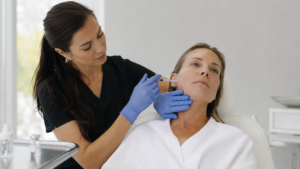
Sculptra costs $700 to $2,000 per vial in Canada, and most plans use 3 to 6 vials. What drives the price, how long it lasts, and London, Ontario pricing.
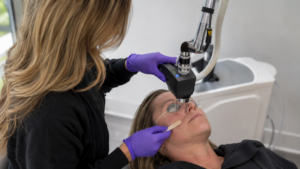
CoolPeel vs CO2 laser: same device, different depth. What changes in downtime, sessions and results, from a London, Ontario medical spa.
