What is preventative Botox?
Preventative Botox means starting treatment before lines are visible at rest, rather than waiting until they are set in. The goal is to reduce how hard certain facial muscles pull during everyday expressions, so the skin over them creases less often.
Botox itself is a purified botulinum toxin. Cleveland Clinic explains that it works by blocking the nerve signals that tell a muscle to contract, which relaxes that muscle and softens the skin above it. It targets dynamic wrinkles, the lines that show up when you move your face, like frown lines between the brows, forehead lines, and crow’s feet at the corners of the eyes.
The word “preventative” is the key difference. You are not erasing a deep crease. You are easing the movement that would eventually create one.
Does preventative Botox actually work?
It can, with a realistic frame. Repeated folding of the skin is one driver of dynamic wrinkles, so softening that movement early may slow how quickly some lines deepen. Results vary from person to person, and Botox does not stop every part of aging. It does nothing for sun damage, volume loss, or skin texture, which is why a good provider talks about it as one piece of a plan, not a cure.
What it will not do is freeze a 26-year-old’s face. Done conservatively, the aim is subtle. You still look like you, with a little less of the pull that carves lines over the years.
When should you start Botox?
There is no single magic age, and honest providers will tell you that. Most people considering prevention start somewhere in their late 20s to 30s, often when they notice a faint line beginning to linger after the expression stops. That lingering line is a more useful signal than a birthday.
Starting in the very early 20s with no early lines usually adds little, since younger skin still bounces back well on its own. This is exactly the kind of judgment call a consultation is for. A provider looks at your muscle movement and your skin, then tells you whether early treatment makes sense or whether waiting is the smarter move. For a fuller picture of how a plan is built, our guide to typical Botox dosages and what to expect walks through it.
How is preventative Botox different from regular Botox?
The biggest difference is dose. Preventative treatment often uses fewer units than a correction-focused treatment, sometimes called “baby Botox” or microdosing. Less product placed thoughtfully keeps movement natural while still easing the strongest pulls.
The areas are usually the classic three: the frown lines between the brows, horizontal forehead lines, and crow’s feet, which are the same cosmetic targets Cleveland Clinic lists for cosmetic Botox. The strategy shifts with the goal. Prevention leans lighter and more conservative, with room to add a touch more at a follow-up if you want a bit more softening.
What to expect at your appointment
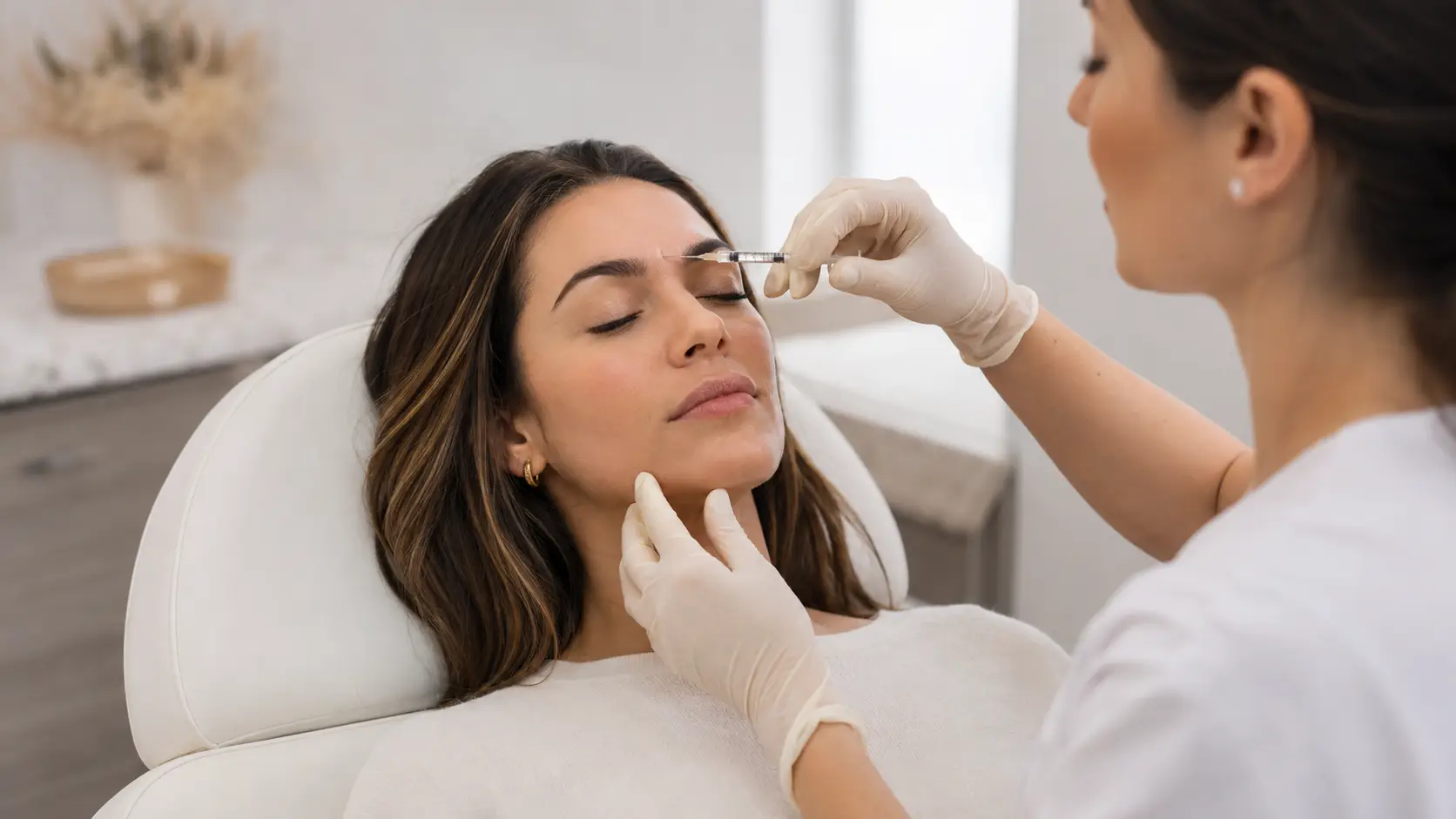
A treatment is quick and nonsurgical, done with a few small injections after a provider maps where your muscles move. You will not see the result that day. It settles over the following days as the treated muscles relax.
Results are temporary. Cleveland Clinic reports the effect lasts on average about three to four months, after which movement gradually returns and treatment can be repeated to maintain the look. Side effects are usually mild and short lived, and can include bruising or numbness at the injection site, and less commonly a temporary droop of the eyelid or brow if the product spreads slightly. Choosing a qualified medical injector is the single biggest factor in staying safe and keeping results natural. You can read more about duration in our post on how long Botox lasts.
Who is a good candidate, and who should wait?
Preventative Botox suits someone with early dynamic movement who wants a subtle, natural result and has realistic expectations. It is not right for everyone. People who are pregnant or breastfeeding, or who have certain neuromuscular conditions or a known allergy to the product, should not have it. Deep folds already visible when your face is fully relaxed are a different concern that a neuromodulator alone will not fix.
An honest injector will tell you when the answer is “not yet.” If you want to see the full range of options first, our injectables and fillers overview and our complete guide to Botox are good starting points.
Preventative Botox in London, Ontario
If you are exploring preventative Botox in London, Ontario, the most useful first step is a consultation with a medical provider who treats faces conservatively and plans dosing around your movement and goals, not a set formula. You can learn about our approach to Botox and book a consultation when you are ready. Prevention is a long game, and starting with the right plan matters more than starting fast.
Frequently asked questions
Is preventative Botox worth it?
It can be, if you have early dynamic lines and want to slow how quickly they deepen. Softening repeated muscle movement early may reduce how fast some lines set in, though results vary and Botox does not address sun damage or volume loss. A consultation is the best way to know if it is worth it for you.
What age should you start preventative Botox?
There is no fixed age. Most people who choose prevention start in their late 20s to 30s, usually when a line begins to linger after an expression. Starting in the very early 20s with no early lines often adds little, since younger skin recovers well on its own.
Will preventative Botox freeze my face?
Not when it is dosed conservatively. Preventative treatment often uses fewer units, sometimes called baby Botox, so you keep natural movement while easing the strongest pulls. A frozen look comes from overtreatment, not from Botox itself.
How long does preventative Botox last?
Botox results are temporary. Cleveland Clinic reports they last on average about three to four months before muscle movement gradually returns. Maintenance appointments keep the softened look consistent over time.
How many units are used for preventative Botox?
Preventative treatment often uses fewer units than a correction-focused treatment, but there is no universal number. The right amount depends on your muscle strength, the areas treated, and how subtle you want the result, so it is set at your consultation.
Sources
1. How Botox works, dynamic wrinkles, roughly three to four month duration, and common mild side effects: Cleveland Clinic, clevelandclinic.org
2. Neuromodulators the most requested minimally invasive procedure in 2023 (up about 9 percent), ages 20 to 29 and 30 to 39 each up more than 8 percent: American Society of Plastic Surgeons 2023 Procedural Statistics, plasticsurgery.org
This article was medically reviewed by Derek Truong, NP, Medical Director at Infinite Medical Spa. It is educational and is not a substitute for a personal medical consultation.